Encode in geometry
In the proposed architecture, input data selects a controlled spiral-pitch state. The current prototype uses controlled vortex-element rotation to generate distinguishable experimental states used to investigate this architecture.
Sinwar Telecom Systems is developing pitch-controlled 3D modulation: a structured-light approach that investigates spiral geometry as an additional controllable variable for optical signaling.
Structured optical field: the encoded signal
The research explores whether controlled changes in optical spiral pitch can provide a distinct, detectable signaling dimension alongside conventional optical parameters. The interesting question isn't whether this replaces existing optical communications (it doesn't, and the site doesn't claim it does). It's whether spiral pitch can provide an additional controllable signaling dimension.
In the proposed architecture, input data selects a controlled spiral-pitch state. The current prototype uses controlled vortex-element rotation to generate distinguishable experimental states used to investigate this architecture.
The receiver measures spatial intensity signatures rather than relying on a single aggregate intensity value.
κ is being investigated as a controllable signaling variable that could potentially coexist with established optical degrees of freedom, rather than substitute for them.
The prototype uses a laser, spatial filtering, a Michelson interferometer, a vortex lens and camera-based spatial detection.
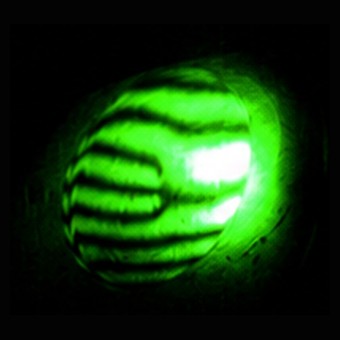
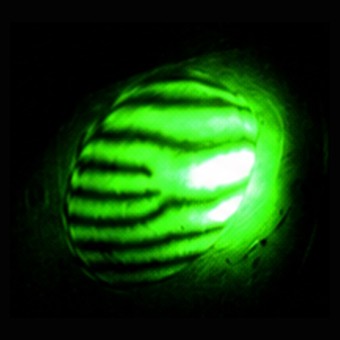
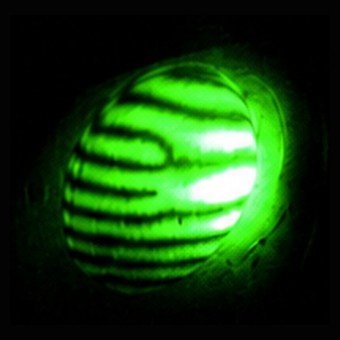
Prototype demonstration: controlled optical states produced distinct interference signatures that were successfully classified at the receiver.
89/90 frames correctly classified using four regions of interest (leave-one-out nearest-centroid).
28/30 symbols correctly decoded in the held-out ±60° sequence (180 frames, six per symbol).
Correct classifications after mount rotation, part of the robustness diagnostic chain.
Experimental results shown above are measured laboratory results from the current prototype and do not represent a commercial transmission-rate claim.
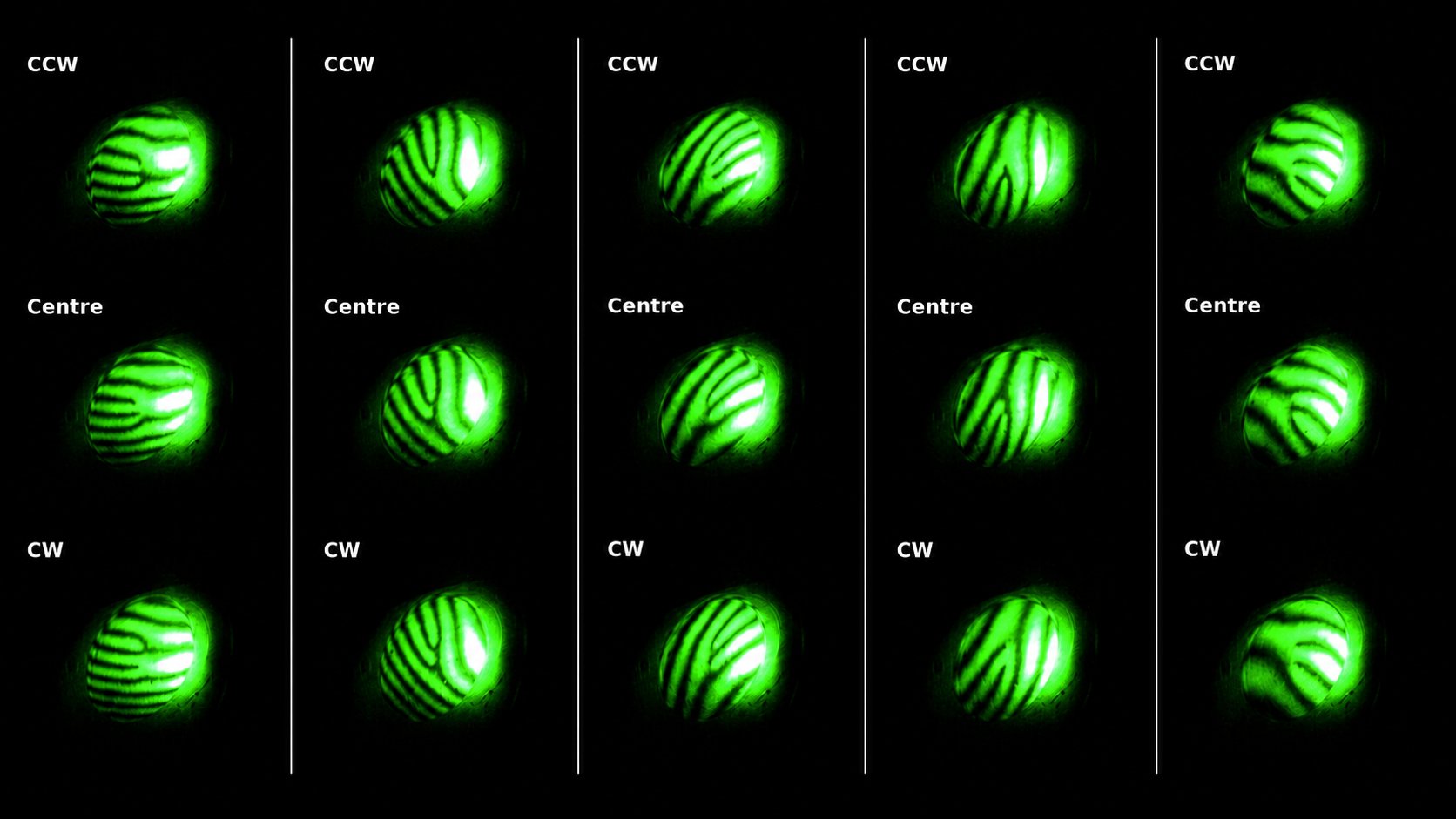
Representative experimental detector frames across five measurement configurations. The interference signatures remain distinguishable across repeated trials.
The underlying method is documented in "Three-State Experimental Demonstration of ROI-Based Spatial Fringe Detection in a Vortex-Lens Interferometer," co-authored with Dr. Mark Paetkau and currently under peer review at SPIE Optical Engineering.
3D Modulation is an independent research program founded and developed by Eliyah Omar El-Moreh, with experimental work conducted in collaboration with Dr. Mark Paetkau.
Covering the spiral-modulated optical transmission method (Canadian Application No. 3,273,914 and a corresponding USPTO non-provisional application) and a receiver-side ROI-based spatial intensity detection method (CIPO and USPTO packages).
Sinwar Telecom Systems is an independent telecommunications and photonics R&D effort focused on pitch-controlled structured-light modulation and receiver-side spatial detection.
The program is intentionally research-led: prototype first, measure the result, document the limitations, protect the intellectual property, and then explore where the architecture may create practical value.
Sinwar is a focused independent R&D effort built around hands-on experimentation, measurement and careful technical validation.
Eliyah leads Sinwar Telecom Systems’ pitch-controlled structured-light modulation research, including optical system development, experimental implementation, measurement, data analysis and intellectual-property development. His background combines physics with experimental engineering and hands-on telecommunications experience, informing Sinwar's focus on experimentally testable photonic communication architectures.
Dr. Paetkau contributes scientific guidance, experimental support, apparatus development, validation testing, and manuscript review to Sinwar's structured-light modulation research.
These are research directions suggested by the architecture, not claims about present commercial capability.
For research collaboration, licensing discussions, technical diligence or industry partnerships, contact Sinwar Telecom Systems directly.